
What PEMF
Can Do for Your Horse
Less stiffness. Better recovery support. A plan that fits the horse, not a fixed protocol.
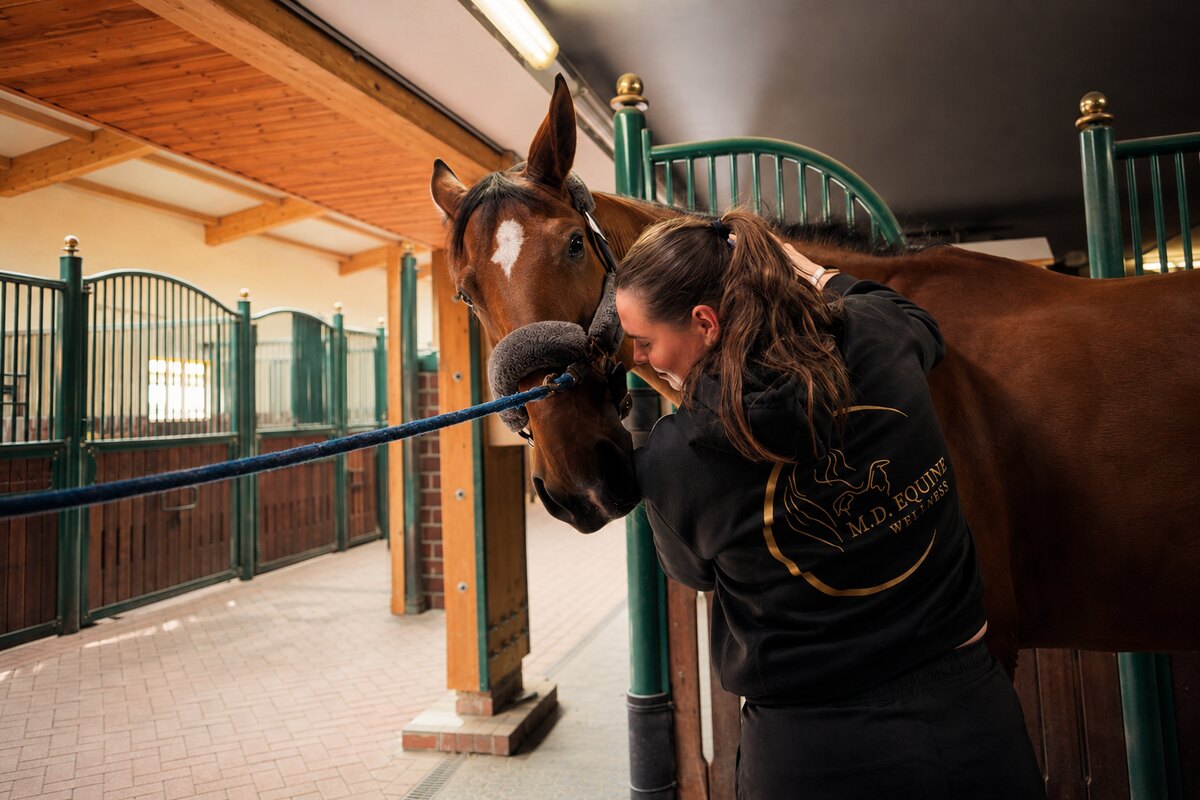
A horse may be in regular work, travelling to competitions, slowing down with age or simply taking longer to loosen up. PEMF is a non-invasive way to support muscular comfort, circulation-related recovery processes and relaxation as part of sensible horse care.
Tension & stiffness
Muscles that feel tight; a back, neck or body that takes time to relax.
Work & competition
Supporting recovery after hard training, long transport and demanding show weeks.
Older horses
Regular comfort-focused care to support relaxation and everyday mobility.
Rehabilitation support
A complementary option for horses with tendon, ligament or joint concerns under veterinary supervision.
When a horse is lame, painful or suddenly different under saddle, a veterinary assessment comes first. PEMF can support a wider plan; it cannot tell us what the diagnosis is.
PEMF stands for Pulsed Electromagnetic Field therapy. A coil creates changing magnetic fields that reach through tissue without manual pressure or mechanical manipulation. This is why it can be used over larger body areas and around areas where hands-on bodywork is less practical.
I use a professional MagnaWave Semi 10 with several loop sizes and adjustable settings. That lets me switch between full-body work and a more focused approach depending on what I observe during the session.
I do not simply turn on a machine and follow a fixed programme. I start with what you tell me about your horse: workload, recent travel, changes in comfort, existing veterinary findings and the reason for the visit.
The session itself is part of the observation. I pay attention to how the horse reacts and changes through the work, then adjust where I spend time, the loop and the intensity. Those reactions guide the session, but they do not diagnose an injury.
For many horses I prefer a full-body session because a horse works as a whole, with targeted attention added where it is useful. Shorter targeted sessions can also fit into an individual plan.
Regular maintenance: often around once a month or every 4–6 weeks. It is a practical starting rhythm for many horses receiving ongoing support, then adjusted to how the horse responds and its workload.
Higher workload, more tension or recurring issues: some horses may benefit from closer intervals, such as every two weeks. Rehabilitation: targeted support can sometimes be more frequent, with the schedule coordinated around veterinary guidance and the stage of recovery.
PEMF may be included as complementary support for horses recovering from tendon or ligament injury, joint discomfort or other veterinary-managed conditions. The goal is to support comfort and recovery around the rehabilitation plan, not to replace imaging, controlled exercise, rest periods or treatment prescribed by the vet.
Evidence for specific equine injury-healing outcomes is still limited and varies with the device and protocol. I will not promise that a tendon heals faster or that PEMF alone keeps a horse sound. I will explain where it fits into your horse’s care.
Answers about riding afterwards, reactions during sessions, PEMF versus physiotherapy, tendon injuries, FEI shows and how often to book are all in one place.
Read the full FAQTell me what you are noticing in your horse. We can choose a sensible first session or a regular plan from there.
Discuss Your Horse on WhatsAppAbout Martyna & My ApproachPricing & Packages